Rapid
3D Printing
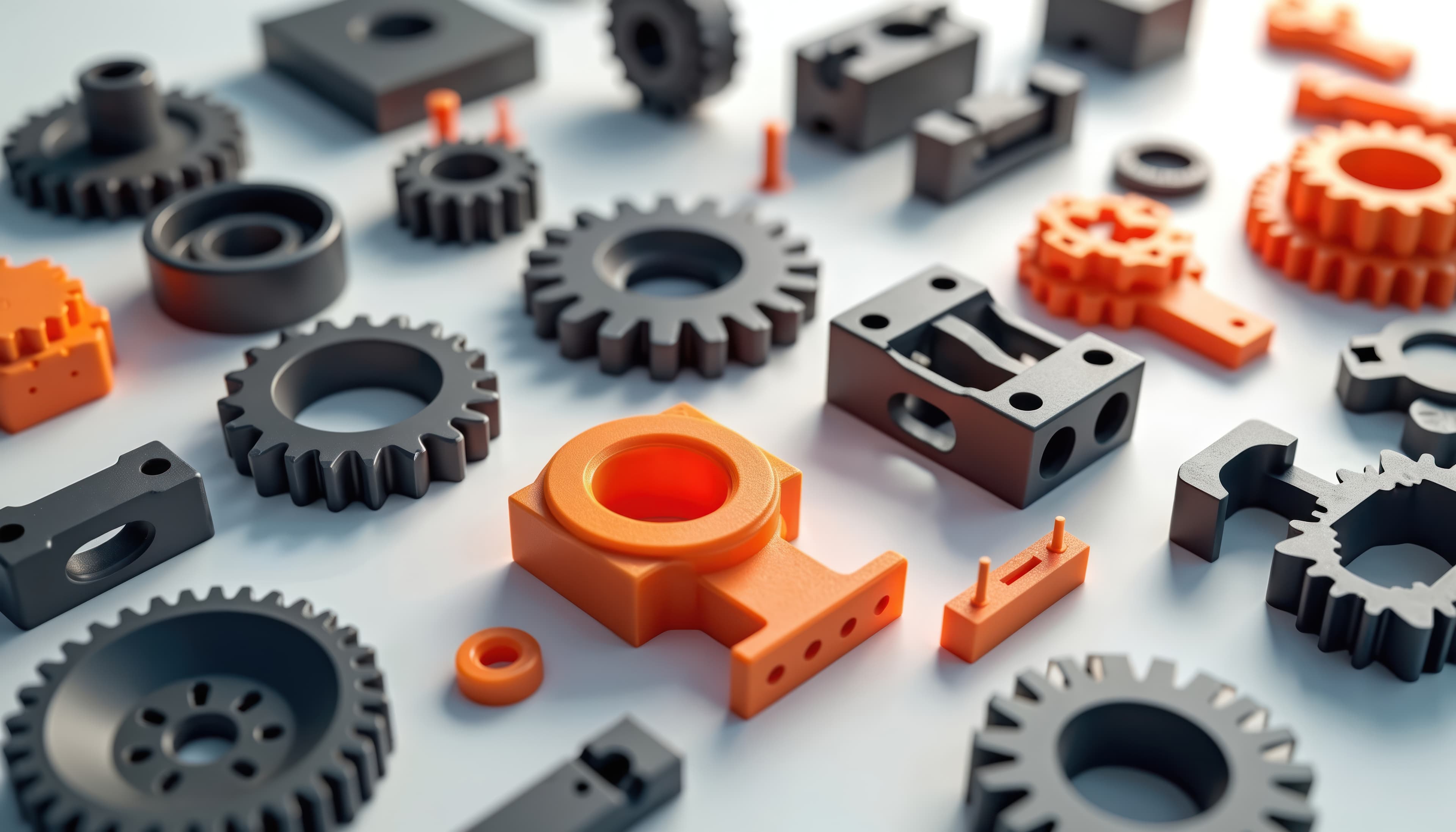
3D printing built for iteration speed, functional testing, and production-ready high volumes. DfAM-first process selection, orientation control, post-processing, and inspection aligned to CTQs—across FDM, SLS/MJF, SLA/DLP, and metal additive options.
DfAM Focus
Orientation-driven
Typical Lead Time
Days
Build Mode
Prototype → High Volume
3D Printing Services
Why Choose PREMSA for 3D Printing
PREMSA delivers 3D printing with a manufacturing-first approach: we define CTQs early (datums, fits, sealing surfaces, functional interfaces, and cosmetic faces) and choose the right process for performance—not just speed.
We focus on the root causes of additive variation—orientation effects, anisotropic strength, warp, support scarring, thermal distortion, and surface texture. Our workflow aligns design intent, material behavior, and post-processing so parts assemble correctly and test reliably.
From prototype iterations to high-volume production, we support build planning, repeatable parameters, traceability, and secondary ops (inserts, tapping, machining of critical surfaces, finishing, and assembly/kitting). You get parts that perform consistently—not one-off prints that only look good on the bench.
What is 3D Printing?
3D printing (additive manufacturing) is a set of processes that build parts layer-by-layer from polymers, resins, or metal powders. It is ideal for rapid iteration, complex geometry, and high-volume production where tooling is not economical.
Successful additive production is a balance of process selection, orientation/support planning, material behavior, and post-processing. When these are aligned, additive can deliver consistent parts for functional testing and end-use programs.
The 3D Printing Workflow
A controlled engineering process optimized for fit, function, cosmetics, and repeatable delivery.
1. File Intake & Requirements Definition
We review CAD + drawings and confirm environment, load cases, cosmetic expectations, CTQs, and target quantities.
2. DfAM Review (Process + Orientation Strategy)
We evaluate minimum features, wall thickness, support risks, anisotropy, warp risk, and tolerance strategy based on mating surfaces and functional datums.
3. Process & Material Selection
We match requirements to FDM, SLS/MJF, SLA/DLP, or metal additive and select material families aligned to strength, thermal and chemical needs.
4. Build Planning
We set orientation, supports, nesting (for powder processes), and parameters to balance surface quality, strength direction, and dimensional control.
5. Printing & In-Process Monitoring
Parts are produced with controlled parameters and basic monitoring aligned to the chosen process and material behavior.
6. Post-Processing & Secondary Ops
Support removal, wash/cure, depowdering, bead blast/dye, coatings, inserts/tapping, and machining of critical datums as required.
7. Inspection & CTQ Verification
We measure CTQs against agreed datums (fit surfaces, holes, sealing lands) and document results per the program’s maturity and risk.
8. Packout, Traceability & Release
Parts are packed to protect surfaces and features; traceability and labeling applied when requested.
Technical Advantages
Fast Iteration Without Tooling
Ideal for engineering cycles where geometry changes frequently and time-to-test matters.
Complex Geometry at High Volume
Internal channels, lattices, and consolidated assemblies can reduce part count and assembly time.
DfAM-Driven Strength Strategy
Orientation and material selection are planned around load paths—not left to chance.
Controlled Cosmetics via Post-Processing
Bead blast, dye, coatings, and smoothing options help hit cosmetic grade when required.
End-Use Polymer Options
SLS/MJF nylons and engineering FDM families support functional end-use programs.
Secondary Ops Integrated
Heat-set inserts, tapping, bonding, and machining of critical surfaces deliver assembly-ready parts.
3D Printing Capacity & Envelope
Part Size & Geometry Range
Feasibility depends on process, wall thickness, orientation, and distortion risk. Large flat parts may require orientation changes or segmentation.
Reviewed by CTQ
Feature Resolution & Detail
SLA/DLP supports fine detail; SLS/MJF supports complex shapes without supports; FDM supports durable thermoplastics with coarser features.
Process-dependent
Throughput & Batching
Build packing and batch planning drive throughput. We optimize nesting/orientation for consistent quality and delivery.
Prototype → High Volume
Not sure which process to choose?
Send your CAD + requirements and request a DfAM + process selection review. We’ll align orientation, supports, materials, and CTQs before you commit.
Quality & Production Standards
Additive quality is driven by process selection, build orientation, thermal behavior, and post-processing. Defining critical-to-quality (CTQ) features (datums, fits, sealing surfaces, holes, and cosmetic faces) helps control cost while protecting performance.
| Category | Technical Capability | Engineering Notes |
|---|---|---|
| Dimensional Control, Orientation & Stability | Dimensional outcomes vary by process and are influenced by orientation, support strategy, thermal distortion, and post-processing. CTQ features can be controlled by designing datums correctly and machining critical interfaces when required. | Tolerance the interfaces that drive fit and function. If a face is a datum in assembly, consider post-machining or a design strategy that protects it from support scarring/distortion. |
| Surface Finish, Layer Lines & Post-Processing | Surface texture depends on process: FDM shows layer lines, SLS/MJF has a matte granular texture, and SLA/DLP can be smooth. Finishing methods (bead blast, dye, coating, polishing) are selected to match cosmetic targets. | Define cosmetic faces and acceptable witness zones. If cosmetics are critical, call out finish targets and the allowed post-processing methods. |
| Process Repeatability, Lot Traceability & Control Plans | Repeatability improves with locked parameters, consistent material lots, and standardized post-processing. Traceability can include material batch, build ID, and revision control when required. | If you need formal documentation (sampling plans, capability evidence, change control), specify it early so the build plan matches your quality system. |
| Material Conditioning, Storage & Hygroscopy | Many polymers are hygroscopic and require controlled storage/conditioning. For resins, wash/cure control affects final properties. For powders, handling and refresh ratios affect consistency. | If performance is critical, treat material conditioning as a CTQ. Define environmental exposure, temperature, and any chemical contact so the correct family is selected. |
Materials
Material selection drives strength, thermal resistance, chemical compatibility, surface quality, dimensional stability, and long-term performance. Share your environment, loads, tolerances, and critical features so we can recommend the right additive process and material family.
FDM Thermoplastics
FDM is widely used for engineering prototypes, fixtures, jigs, manufacturing aids, and low-volume functional parts. Mechanical performance depends on material family, wall design, infill strategy, and build orientation.
SLA / DLP Resins
Photopolymer resins provide excellent surface quality and high feature resolution. Final properties depend on resin chemistry and post-curing.
SLS / MJF Polymers
Powder-bed polymer processes support complex geometry without support structures and are well suited for functional end-use parts.
Metal Additive Materials (DMLS / SLM)
Metal additive manufacturing supports complex geometries and internal channels. Secondary heat treatment and finish machining are often required.
Post-Processing & Secondary Operations
Additive parts require controlled post-processing to achieve cosmetic grade, interface accuracy, and mechanical performance. Workflows are selected based on geometry, material, and end-use requirements.
Secondary Operations & Surface Options
Design for Additive (DfAM) (DFAM)
Guidelines to control warp, anisotropy, supports, interfaces, and CTQ outcomes.
| Design Feature | Technical Recommendation |
|---|---|
| Wall Thickness & Minimum Features | Maintain consistent wall thickness and respect minimum printable features based on process. Thin unsupported walls increase warp risk. |
| Supports, Orientation & Warp | Part orientation drives strength direction, surface finish, and distortion. Plan supports to protect cosmetic faces and datums. |
| Holes, Threads & Inserts | Print holes undersized when needed and finish-machine critical fits. Use heat-set inserts or helicoils for structural threads. |
| Tolerances & Mating Interfaces | Treat mating surfaces and sealing faces as CTQs. Machine datums when repeatable assembly alignment is required. |
| Lattice / Infill & Strength Strategy | Align infill and orientation to load paths. Avoid assuming isotropic behavior in polymer additive processes. |
| Drawing & Specification Checklist | Define CTQs, cosmetic zones, datums, fit classes, environment, and expected quantity before build release. |
Applications & Industries
3D Printing Applications
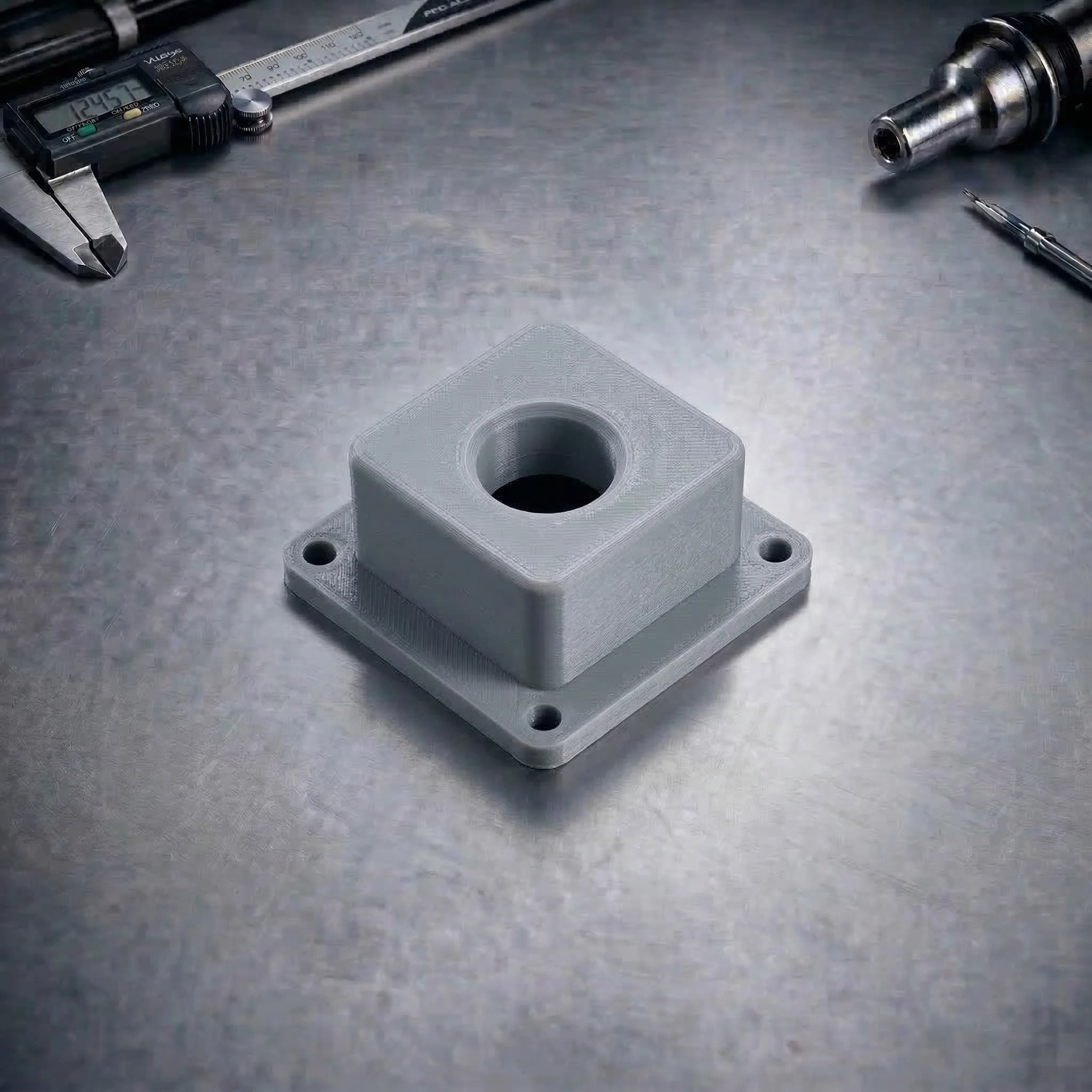
Functional Prototypes
Engineering validation parts for form, fit, and mechanical testing before production tooling.
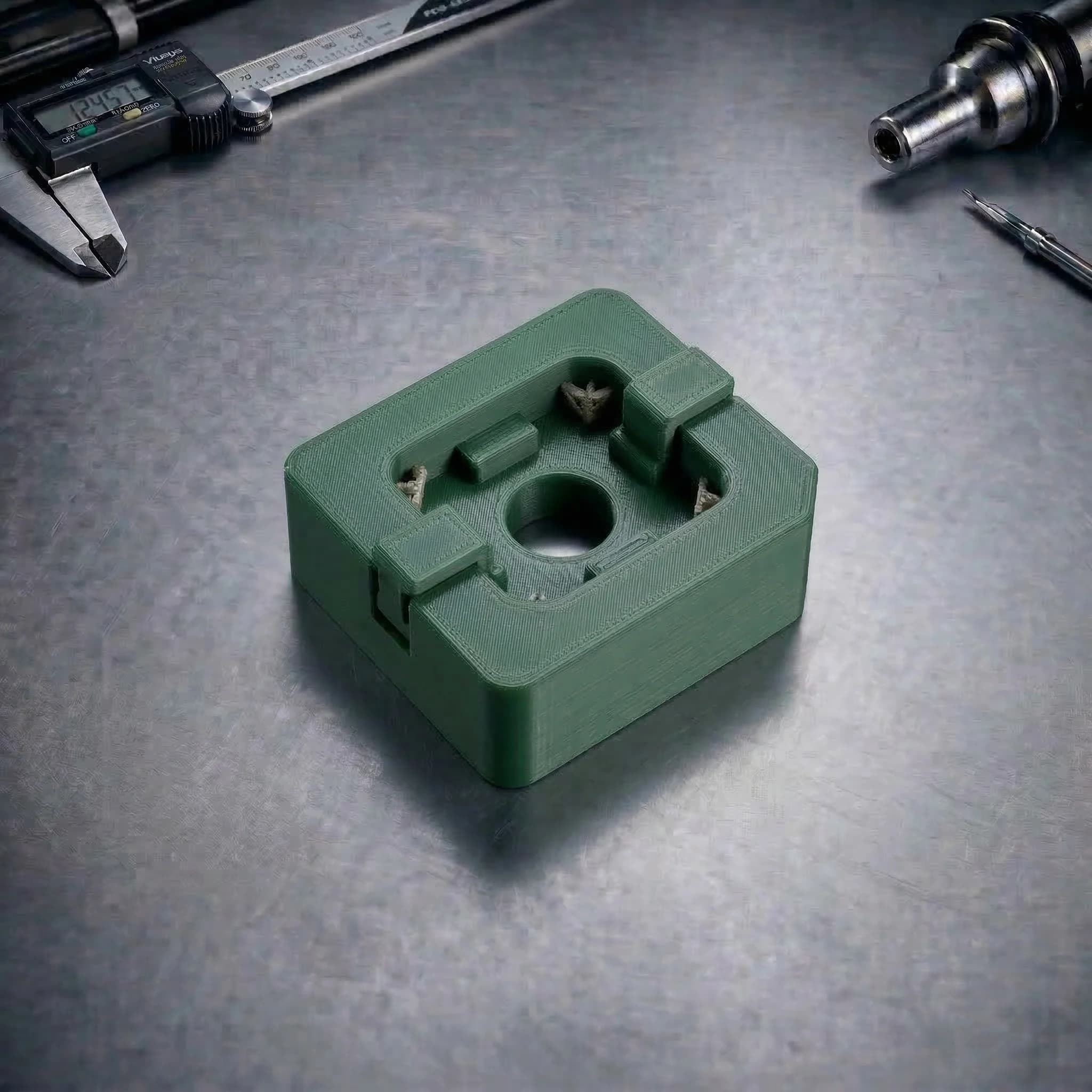
Jigs, Fixtures & Tooling Aids
Custom fixtures, soft jaws, gauges, and assembly aids built quickly to support manufacturing workflows.
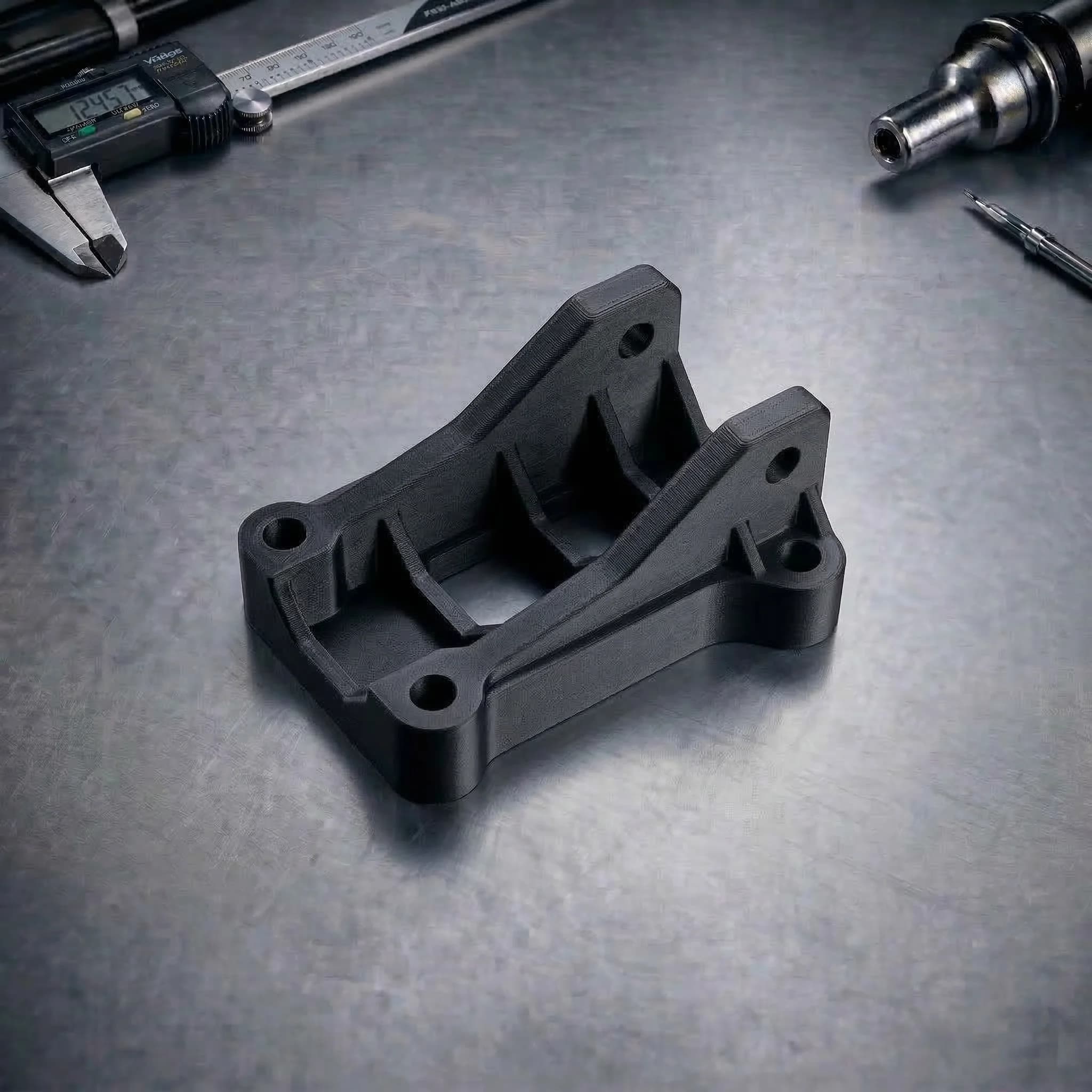
High-Volume End-Use Parts
Production-ready nylon or engineering polymer components where tooling is not economical.
3D Printing Industries
Electronics and Semiconductors
Custom enclosures, thermal management components, fixtures, and rapid prototyping for electronic and semiconductor equipment.

Industrial
Functional prototypes, machine components, guards, brackets, and tooling used across industrial production environments.

Robotics
Lightweight structural parts, sensor mounts, cable management components, and custom robotic end-of-arm tooling.

FAQs & Knowledge Base
3D Printing FAQs

Ready to accelerate your product development?
Upload CAD and requirements for a DfAM-first review. We’ll align process selection, orientation, materials, post-processing, and CTQ strategy to deliver reliable 3D printed parts for testing or high-volume production.
Engineering Review: Under 2 Hours