Precision
Tube Bending
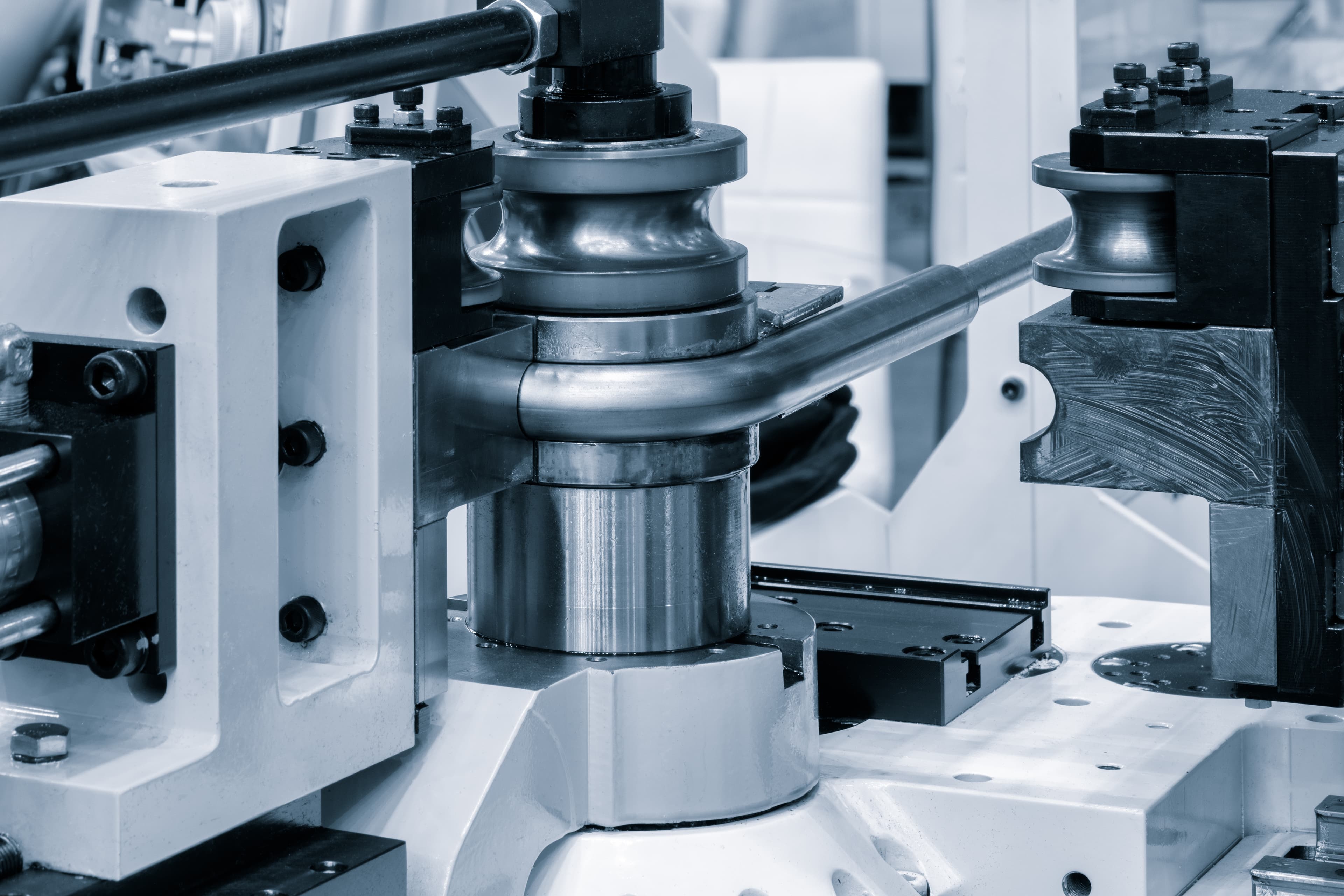
Tube bending for frames, weldments, racks, and structural assemblies. Controlled radii, consistent angles, and orientation/clocking management—with springback compensation and optional post-bend finishing—built for prototypes and scalable production.
Angle Control
±0.5° (typ.)
Fast-Track
5–10 Days
Profiles
Round / Square / Rect.
Tube Bending Services
Bend-to-Fit Tube Forming Built for Weldments and Assemblies
PREMSA delivers tube bending designed around assembly success: controlled bend radii, consistent angles, and reliable orientation/clocking so parts land where fixtures expect them. We validate bend intent early to prevent scrap from missing tangent lengths, impossible radii, or incorrect bend planes.
Our approach is grounded in real forming constraints: wall thinning and ovality risk, wrinkling potential, tooling feasibility (mandrel/wiper dies), and springback behavior by alloy and radius. We focus on parts that align correctly in fixtures—without surprises during tack-up.
From rapid prototypes to production runs, PREMSA supports marking, kitting, optional end prep, and CTQ-driven verification. We prioritize the dimensions that matter: bend angles, centerline radius, tangent lengths, end-to-bend location, and clocking for multi-bend parts.
What is Tube Bending?
Tube bending is a controlled forming process used to shape tube or pipe into precise radii and angles while maintaining function-critical characteristics such as orientation, tangent length, and end location. The goal is repeatable geometry so parts fit reliably in weldments, frames, and assemblies.
Depending on geometry and tolerance targets, tube bending may use mandrel/rotary-draw bending for tight radii and wrinkling control, roll bending for large-radius arcs, or press/incremental bending for certain forms. Successful bending balances radius feasibility, wall thinning, ovality limits, springback compensation, and inspection aligned to assembly interfaces.
The Tube Bending Workflow
A controlled engineering process optimized for repeatability, fit-up, and production stability.
1. File Intake & Bend Spec Requirements
We receive drawings/models and confirm tube profile, material, wall thickness, bend radii, angles, tangent lengths, and any orientation/clocking requirements.
2. DFM Review for Radius, Tangents & Multi-Bend Feasibility
We validate minimum radius feasibility, straight length requirements for grip/tangents, collision risks for multi-bend parts, and post-bend trim strategy.
3. Process & Tooling Selection
We select the best process (mandrel/rotary-draw, roll bending, press/incremental) based on CLR, wall thinning risk, wrinkle control, and tolerance needs.
4. Springback Strategy & Parameter Setup
We define overbend targets and control variables by material and radius. For critical parts, we lock down settings after first-article validation.
5. Datum, Clocking & Bend Plane Control
We establish datums and orientation references so bend planes and rotations remain consistent across the batch—especially for multi-bend components.
6. Bending & In-Process Checks
Parts are formed to target geometry with in-process verification of angle, tangent length, and orientation. Adjustments are made early to protect yield.
7. Post-Bend Trim, Deburr & Identification
If required, we trim ends to final length, deburr/edge-break, and apply markings for orientation control. Kitting/bundling maintains traceability.
8. Inspection & Release
CTQ features such as angles, radii, tangents, end-to-bend locations, and clocking are verified using gauges, fixtures, or CMM (as required).
Bending Methods & Capabilities
Mandrel / Rotary Draw Bending
Best for tight radii and high repeatability—reduces wrinkling and controls ovality for fit-critical assemblies.
Roll Bending
Ideal for large-radius arcs and smooth curvature—great for frames, guards, and structural contours.
Press / Incremental Bending (When Applicable)
Supports certain forms and prototypes where segmented bending or forming steps are acceptable.
Springback Compensation
Overbend tuning by material and thickness to hit final angles consistently across production lots.
Ovality & Wrinkle Control
Tooling strategy (mandrel/wiper), lubrication, and setup parameters to protect section integrity.
Marking, Bundling & Kitting
Part IDs, orientation marks, and kit packaging to reduce assembly errors and speed builds.
Technical Advantages
Repeatable Bend Angles & Radii
Controlled setup and springback strategy stabilize bend geometry from first-article through production.
Reliable Orientation & Clocking
Datum and rotation control keeps multi-bend parts aligned to fixtures and mating interfaces.
Controlled Ovality & Wall Thinning
Process/tooling selection reduces wrinkling and protects section integrity where strength matters.
Reduced Rework & Scrap Risk
Early DFM review catches impossible CLR, insufficient tangents, and post-bend trim conflicts before release.
Assembly Fit-Up Speed
Consistent tangents and end locations reduce fixture adjustment, tack time, and mismatch at joints.
Inspection Aligned to Fit
Verification focuses on CTQ features like angles, CLR, tangents, end-to-bend, and clocking/rotation.
Tube Bend Capacity & Envelope
Profiles Supported
Round, square, and rectangular tube profiles are commonly supported. Pipe vs tube is reviewed based on spec and tolerance needs.
Round / Square / Rect.
Size Range
Supported size range depends on profile, CLR, wall thickness, and process (mandrel vs roll). Tight CLR may limit OD range.
Reviewed case-by-case
Repeatability & CTQ Control
Repeatability depends on material behavior, springback strategy, and fixture/clocking control. Tight CTQ may require dedicated gauges.
CTQ-driven per print
Tight Radii or Multi-Bend Clocking Requirements?
If your part has tight CLR, multiple bend planes, or strict end location requirements, request a bend strategy review before release.
Bend Quality & Production Standards
Bend results depend on CLR, wall thickness, alloy, tooling, and springback behavior. Defining critical-to-quality (CTQ) features (angle, radius, tangent length, end-to-bend, clocking) helps control cost while protecting fit and downstream welding.
| Category | Technical Capability | Engineering Notes |
|---|---|---|
| Bend Radius, Angle & Consistency | Angle and radius consistency depend on process, tooling, and springback compensation. Tight specs may require first-article tuning and dedicated gauges/fixtures. | Tolerance CTQ angles and end-to-bend locations where assemblies demand it. Over-constraining every dimension can increase cost without improving fit. |
| Ovality, Wrinkling & Wall Thinning | Ovality and thinning increase as CLR tightens and wall thickness decreases. Mandrel and wiper tooling reduce wrinkling on tight bends. | If section integrity is critical (flow, strength, cosmetics), call out ovality limits and identify critical bend zones. |
| Springback, Material Effects & Compensation | Springback varies by alloy, temper, wall thickness, and CLR. Compensation is achieved through controlled overbend and parameter lock-in after validation. | Provide material spec/temper and heat treatment state. Mixed lots can shift springback and drive angle variation. |
| Inspection, Traceability & Lot Control | Inspection focuses on CTQ geometry using gauges, fixtures, or CMM (as required). Traceability can be maintained via labeling, bundle control, and lot identification when required. | Provide clear datums and clocking notes for multi-bend parts. CTQ callouts should match real assembly interfaces. |
Tube Materials
Choose from production-grade tube materials commonly used for bent frames, structures, and tubular assemblies. Material selection impacts bend radius capability, springback behavior, ovality control, and finishing compatibility.
Metals (Tube / Pipe)
Specialty Materials (Case-by-Case)
Deburr, End Prep & Secondary Ops
For cut tube components, secondary operations are often driven by weld fit-up, handling safety, identification, and finishing requirements. Edge conditioning, secondary machining, and organized packaging help improve assembly throughput and part traceability.
Finish Options
Tube Bending DFM Guidelines (DFM)
Bend manufacturability is driven by CLR, wall thickness, straight length requirements, bend sequence, and clocking control. Following these DFM rules reduces scrap, protects cosmetics, and improves repeatability in production.
| Design Feature | Recommendation |
|---|---|
| Bend Radius vs Wall Thickness | Specify feasible CLR relative to OD and wall thickness. Tighter CLR increases ovality/thinning and may require mandrel/wiper tooling or design changes. |
| Straight Lengths, Tangents & Grip | Provide sufficient straight lengths for clamping and tooling engagement. Tangent lengths that are too short can cause slip, marks, or angle/radius variation. |
| Orientation, Clocking & Bend Planes | Define datums and rotation references for multi-bend parts. Clear bend plane/clocking notes prevent out-of-plane bends and fixture misalignment. |
| Holes/Slots: Pre vs Post Bend | Consider whether features should be added after bending to avoid distortion, ovality effects, or positional drift. If pre-bend features are required, control clocking and protect cosmetic faces. |
| Weld Fit-Up & Post-Bend End Prep | Plan joint prep and trim strategy around the final formed geometry. Call out critical end locations relative to bend tangents and mating interfaces. |
| Drawing & Bend Spec Checklist | Provide CLR, bend angles (with tolerances), tangent lengths, overall lengths (as formed/after trim), datums, clocking notes, CTQ callouts, and part IDs. Include gauge/fixture references if applicable. |
Applications & Industries
Tube Bending Applications
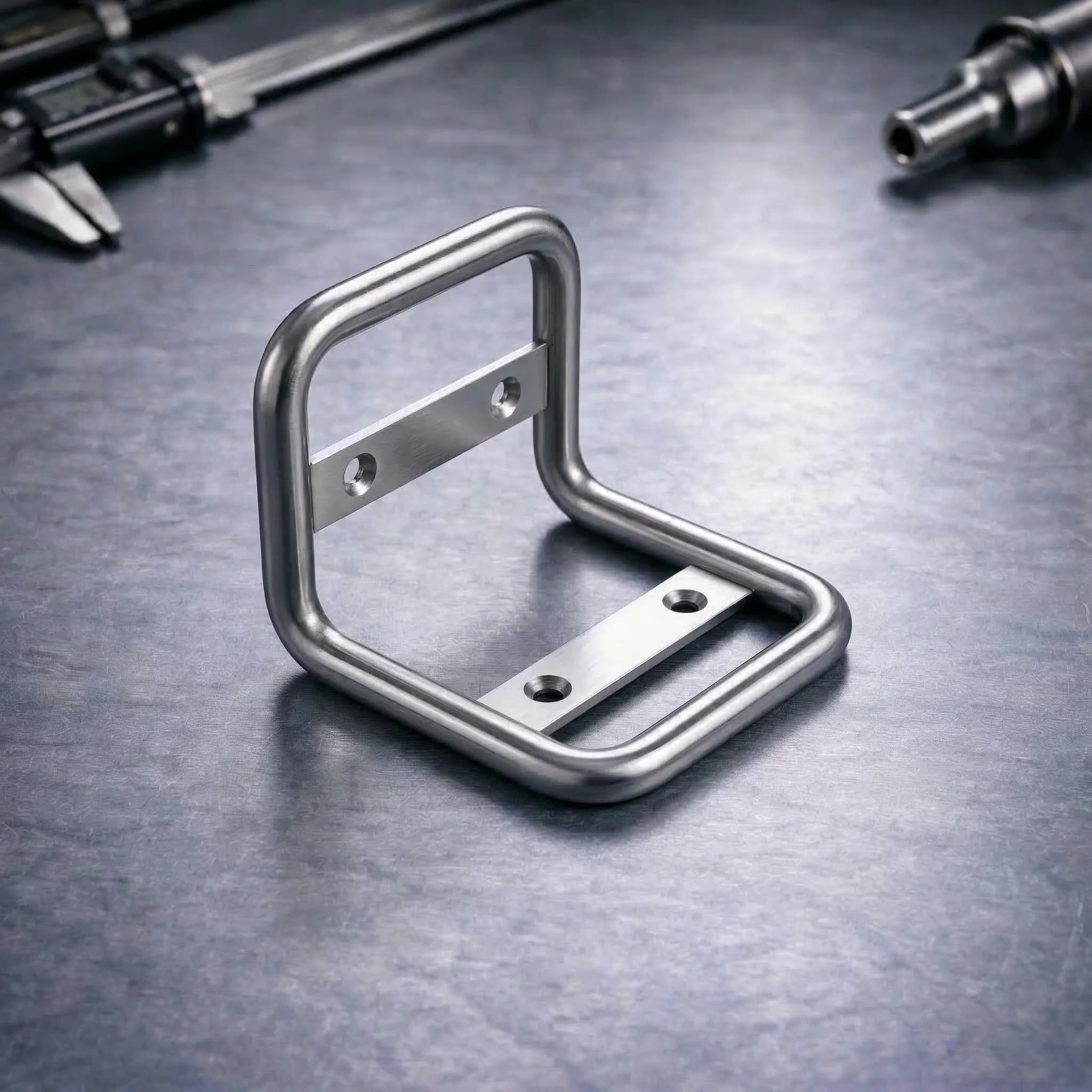
Frames & Weldments
Bent tube members with controlled radii and tangents to speed fixture assembly and welding.
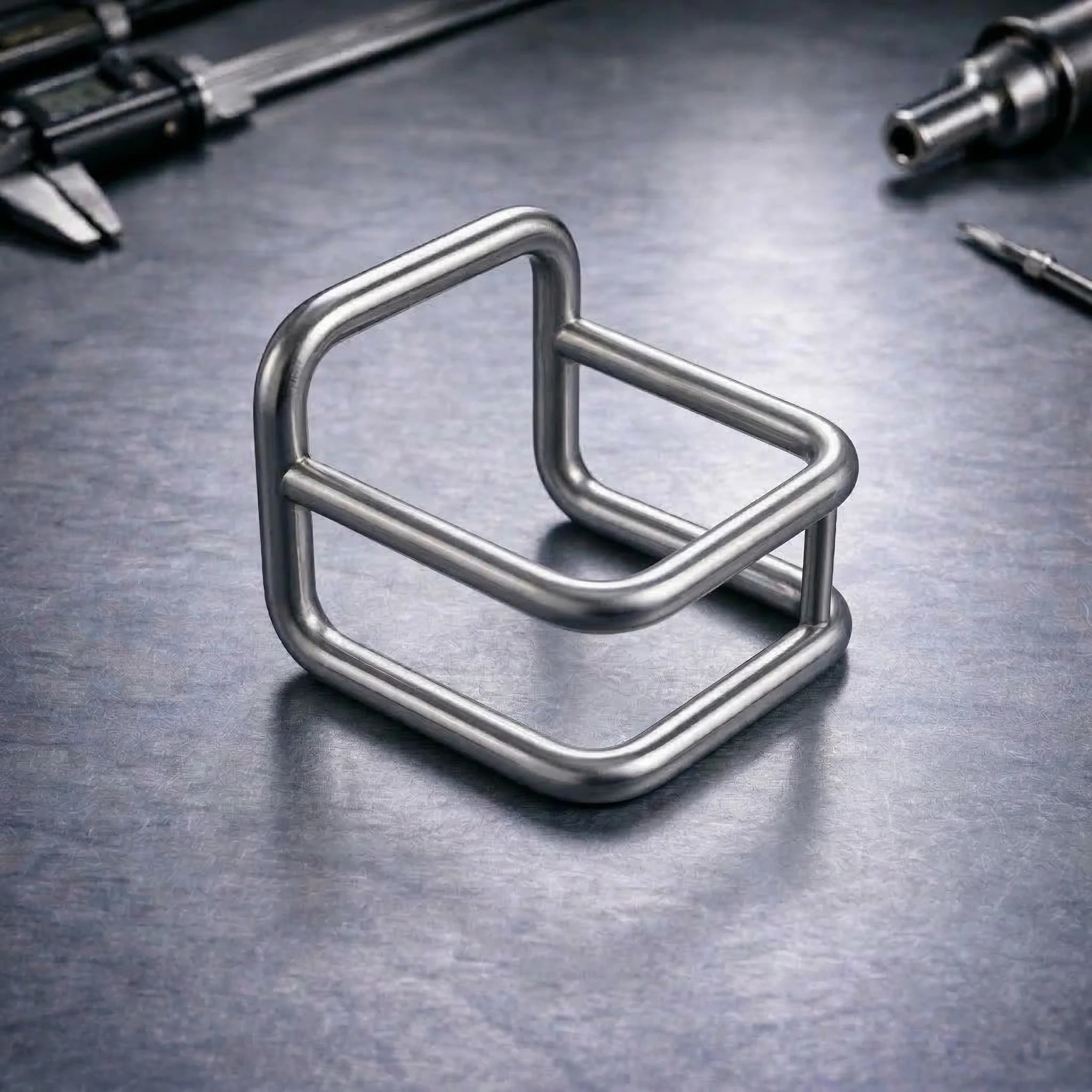
Guards, Handles & Carts
Repeatable bends with orientation control for ergonomic and structural components.
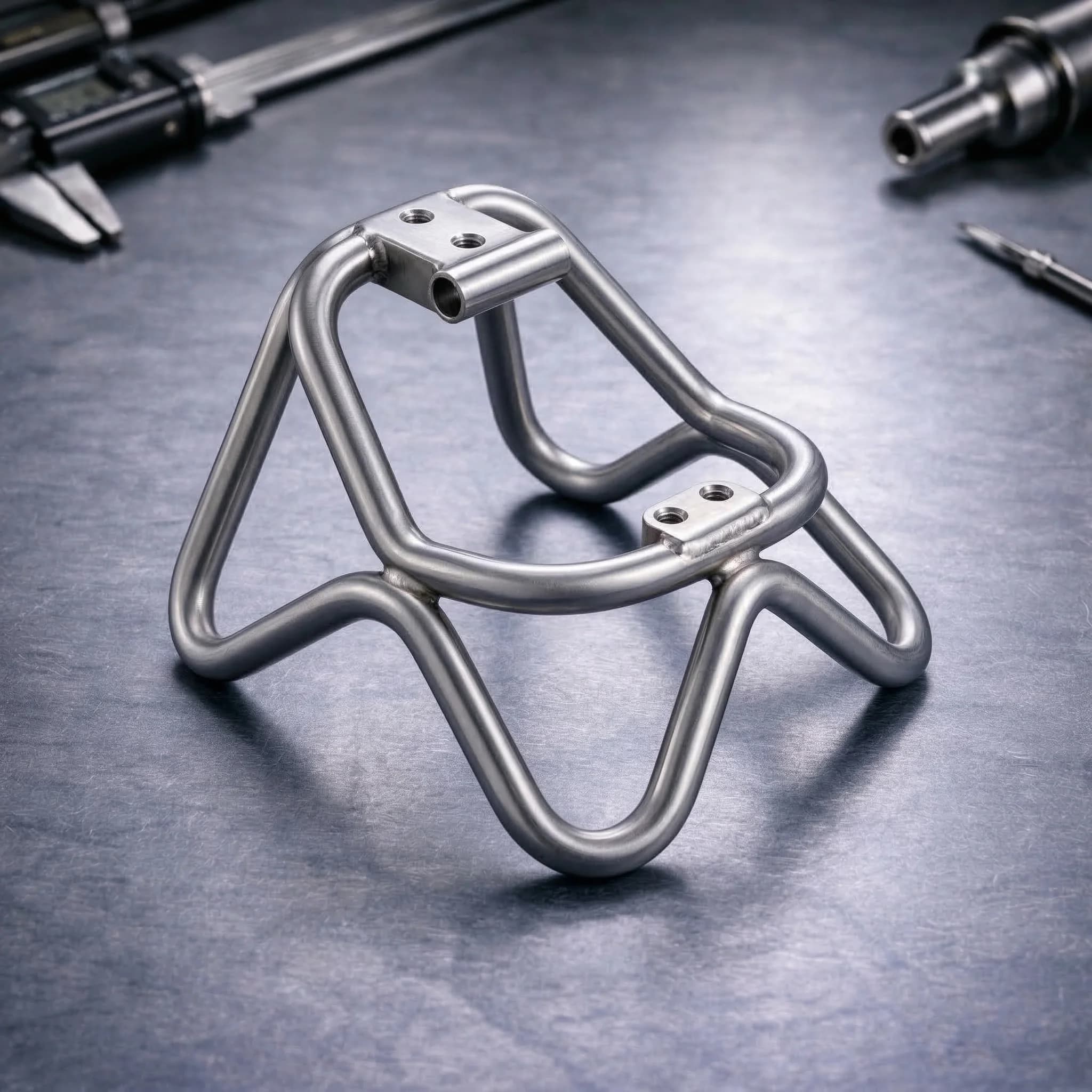
Racks, Stands & Supports
Multi-bend parts with controlled end locations for modular builds and consistent fit-up.
Tube Bending Industries
Aerospace and Defense
Precision bent tubing for structural frames, fluid routing, and lightweight assemblies used in aerospace and defense systems.

Medical
Bent stainless steel and aluminum tubing used in medical equipment frames, support structures, and precision device assemblies.

Energy
Formed tubing used in piping supports, structural assemblies, and energy infrastructure systems.

FAQs & Knowledge Base
Tube Bending FAQs

Ready to form precision tube components?
Upload drawings and models for a fit-up-backed quote. We’ll review CLR feasibility, tangent/grip requirements, springback compensation, ovality risk, clocking control, and CTQ callouts to deliver bent tube parts that assemble right.
Engineering Review: Under 2 Hours