High-Precision
CNC Turning Services
Engineering-driven manufacturing for complex rotational geometries. We specialize in tight concentricity, precision bores, and repeatable diameters from rapid prototypes to high-volume bar work.
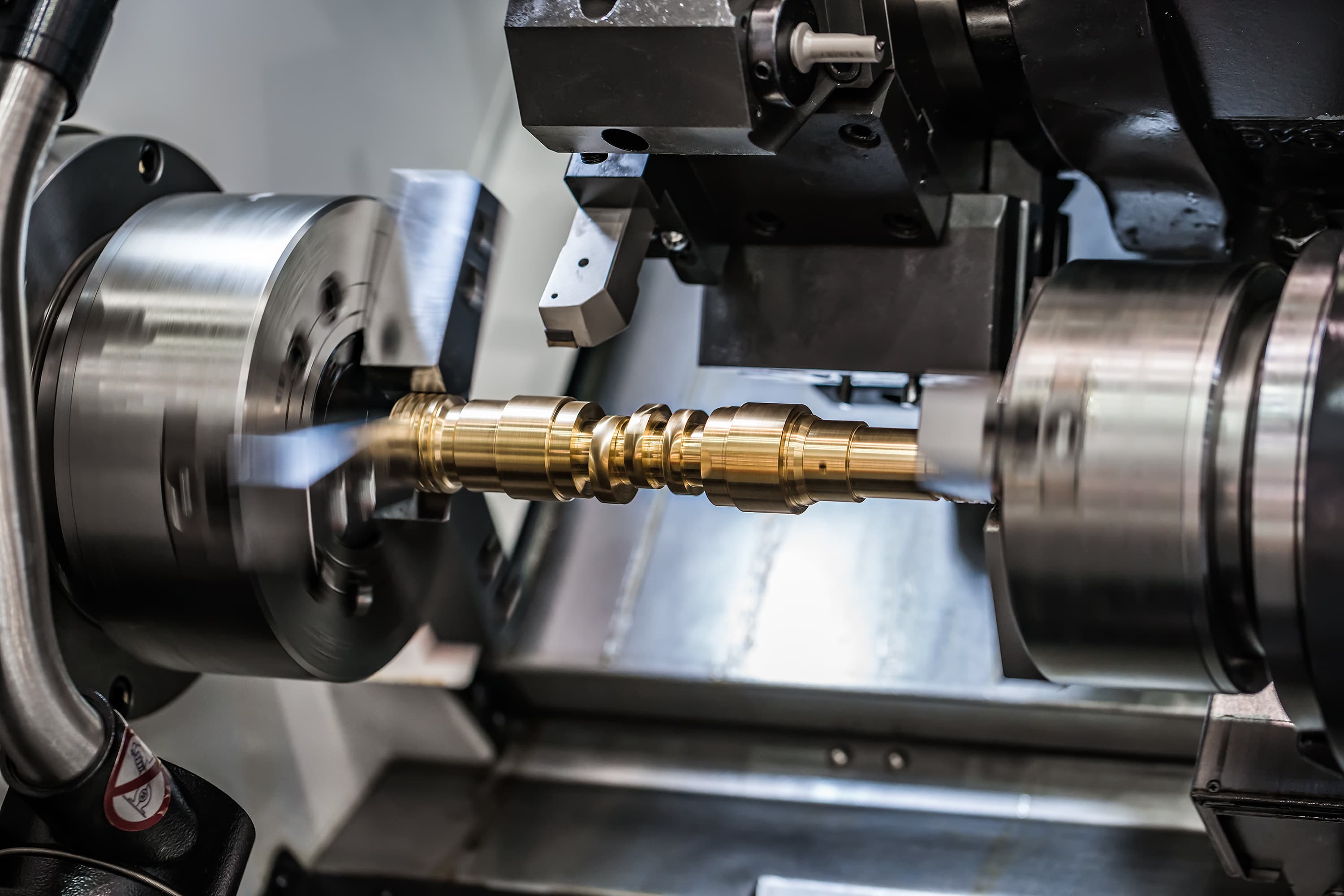
Axial Tolerance
< ±0.001"
Fast-Track
5–7 Days
Scalability
100k+ Units
In-house process
Turning, deburring, and inspection under one roof.
CNC Turning
Engineering-First Rotational Machining
PREMSA delivers precision CNC turning services engineered for high-performance assemblies where coaxiality and diameter consistency are non-negotiable. We machine industrial-grade alloys and polymers directly from your technical data, ensuring that every shoulder, groove, and thread aligns perfectly with your mechanical intent.
Our workflow is metrology-driven: we don't just turn parts; we validate datum structures, analyze runout risks, and optimize toolpaths to prevent taper and deflection. By performing DFM reviews early, we identify opportunities to reduce setups and improve the Cpk of your critical dimensions.
From high-speed Swiss prototyping to high-volume bar-fed production, PREMSA provides certifiable quality. We support your full lifecycle with MTRs, CoCs, and AS9102-level reporting. Engineers choose us because we bridge the gap between complex CAD geometry and physical, inspectable reality.
What is CNC Turning?
CNC turning is a subtractive manufacturing process that utilizes high-speed workpiece rotation and single-point cutting tools to generate precise cylindrical geometries. Unlike milling, the part rotates while the tool moves along X and Z axes, enabling the production of features with absolute axial symmetry and superior concentricity.
It is the primary process for precision-engineered rotational hardware—including multi-step shafts, high-tolerance bushings, intricate bores, and complex threaded interfaces where rotational balance and surface integrity are paramount.
The Turning Workflow
A controlled engineering process optimized for diameter repeatability and cycle efficiency.
1. Axial DFM Review
Analysis of diameter-to-length ratios, groove reliefs, and threading standards. We ensure the geometry is stable enough to resist deflection during high-velocity material removal.
2. Tooling & CAM Strategy
Selection of specific insert nose radii and chip-breaker geometries. We program constant surface speeds (CSS) to maintain uniform finish across varying diameters.
3. Multi-Axis Execution
Parts are machined on twin-spindle or live-tooling lathes. This allows for complex cross-drilling and milling in a single setup, eliminating positional errors between operations.
4. Metrology Validation
Verification of runout, cylindricity, and diameter tolerances using calibrated micrometers, air gages, and CMMs to ensure compliance with your GD&T specifications.
CNC Turning Platforms
Precision 2-Axis Lathes
Ideal for high-accuracy OD/ID turning, facing, and threading. Optimized for rigid machining of heavy-duty components and standard rotational hardware.
Multi-Axis Live Tooling
Combines turning and milling in one center. Enables off-center holes, flats, and hexes without secondary setups, preserving perfect relationship to the main axis.
Swiss-Type Machining
The gold standard for small-diameter, slender parts. Sliding headstock technology provides maximum support at the point of cut for micro-precision components.
Technical Advantages
Superior Concentricity
By rotating the part on a single spindle, we achieve coaxial relationships that are difficult or impossible to replicate on a mill.
Optimized Surface Integrity
Continuous tool contact results in uniform radial finishes, ideal for sealing surfaces and high-RPM rotating assemblies.
High-Velocity Throughput
Turning is significantly faster for rotational geometry, reducing lead times and unit costs for mid-to-high volume production.
Precision Internal Bores
Specialized boring bars and reamers allow for high-tolerance internal diameters with controlled cylindricity and finish.
Certifiable Repeatability
Stable workholding and thermal compensation in our lathes ensure that part 1 is identical to part 10,000.
Integrated Secondary Ops
Live-tooling lathes eliminate the need for separate milling setups, reducing the risk of handle-marks and tolerance stack-up.
Lathe Capacity & Envelope
Turning Capacity
Supported capacity across multi-axis centers. Optimized for everything from small precision pins to large-scale industrial spindles and shafts.
Ø 12" x 24" (Swing x Length)
Feature Resolution
Ability to machine fine grooves, small radii, and ultra-thin walls. DFM reviewed to ensure part rigidity remains within tolerance limits during the cut.
±0.001" / 0.003" Groove Width
Bar Work & Volumes
Automated bar feeding for continuous production. Capacity scales from R&D prototypes to 24/7 high-volume contract manufacturing.
50,000+ Units
Custom Requirements?
For oversized diameters, slender aspect ratios, or exotic alloy turning, request a specialist engineering assessment.
Precision Standards & GD&T
Turning tolerances and axial GD&T are the primary cost drivers. Clearly defining critical fits and runout limits ensures that your assembly performs exactly as designed without unnecessary over-processing.
| Standard | Technical Capability | Engineering Notes |
|---|---|---|
| Standard Turning | Achievable on standard 2-axis lathes for non-critical diameters and lengths. Typically ±0.005" or ISO 2768-m standards. | Best for spacers, basic hardware, and non-mating features. |
| High-Precision Bores | Tight internal and external diameters down to ±0.001". Requires precision boring, reaming, and thermal control during the operation. | Critical for bearing press-fits and high-speed spindles. |
| Thread Classes | Single-point or tapped threads per ASME B1.1 or ISO metric. Supporting Class 2A/2B and precision 3A/3B requirements. | Define thread depth and pitch diameter gaging requirements on drawings. |
| Radial Finish (Ra) | Surface finishes controlled via feed rate and insert geometry. Typical ranges from Ra 125 down to Ra 16 (0.4 μm) on specialty finishing passes. | Ra 32 or better is recommended for dynamic seals and wear surfaces. |
| Axial Verification | Geometric verification of concentricity, total runout, and cylindricity using precision spindles, bore gages, and CMM metrology. | Coordinate inspection levels (FAI/LTPD) during the RFQ stage. |
CNC Turning Materials
We machine a wide selection of production-grade metals and engineering plastics. Don’t see your specific material? Upload your spec and our team will confirm availability and custom machinability within 24 hours.
CNC Turning Metals
CNC Machining Plastics
Surface Finishes
Select a finish to enhance functional performance—including corrosion resistance, wear protection, electrical conductivity, or cosmetic requirements. Need a custom specification? Upload your print or finishing spec and our team will validate process compatibility and availability.
CNC Turning Finishing Options
Turning DFM Standards (DFM)
Designing for axial symmetry requires a specific focus on rigid workholding and tool-path efficiency. Adhering to these CNC turning guidelines minimizes vibration (chatter), prevents taper, and ensures that critical fits remain within CPK limits during production.
| Critical Geometry | Technical Standard |
|---|---|
| Grooves, Reliefs & Radii | Standardize groove widths to match common insert sizes (e.g., 0.047", 0.093", 0.125"). Use a 0.015" minimum radius on internal shoulders to prevent stress risers and tool breakage. Relief grooves are recommended at the end of threads to ensure proper seating of mating components. |
| Aspect Ratios & Wall Rigidity | Thin-walled cylindrical parts are susceptible to harmonic vibration. Maintain a minimum wall thickness of 0.020" (0.5mm) for metals. For slender parts, keep the length-to-diameter ratio below 3:1 to prevent part deflection unless using a tailstock or steady rest. |
| Concentric Bores & IDs | Limit internal bore depths to 4x the diameter to maintain straightness and avoid tool 'walking.' For internal threads, specify a 2x diameter engagement; deeper threads increase the risk of tap breakage without providing significant mechanical advantage. |
| Internal & External Undercuts | Design undercuts with standard 45° or 90° geometry to allow standard grooving tools to exit the cut cleanly. Complex internal undercuts should be avoided as they often require custom-ground tooling, increasing setup time and cost. |
| Setup & Live Tooling Strategy | Minimize secondary operations by designing features accessible in a single setup. While our live-tooling lathes handle cross-drilling and off-center milling, keeping features aligned to the primary axis is the most effective way to lower the cost-per-part. |
| Technical Drawing & GD&T | Ensure your 2D print explicitly defines concentricity, total runout, and thread classes (e.g., 2A/3B). Clearly marking critical-to-quality (CTQ) dimensions allows our metrology team to align the inspection plan with your assembly requirements. |
Applications & Industries
CNC Turning Applications
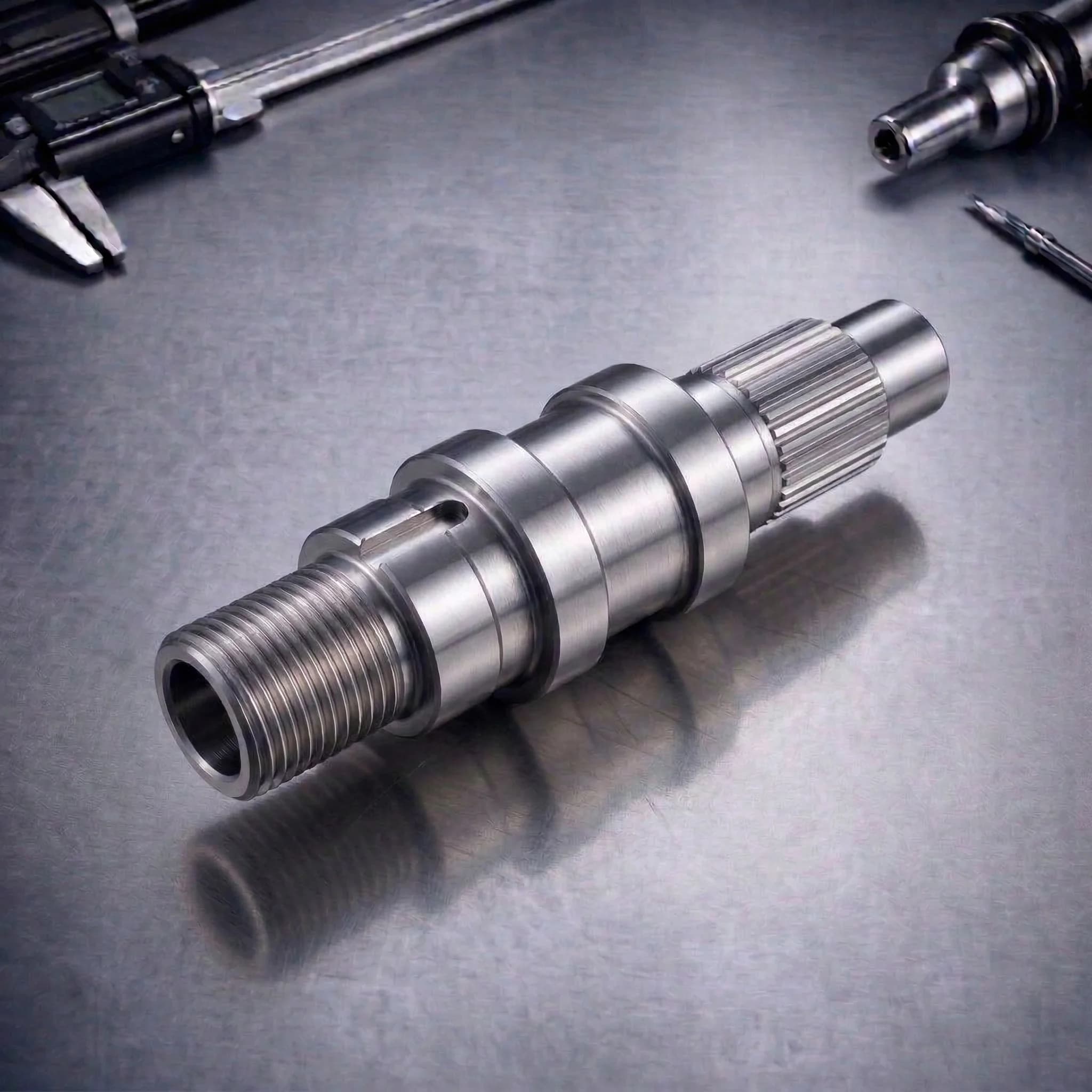
High-Precision Transmission Shafts
Multi-stepped spindles and shafts requiring strict runout control (±0.001") and ground-quality surface finishes for high-RPM power transmission and robotics.
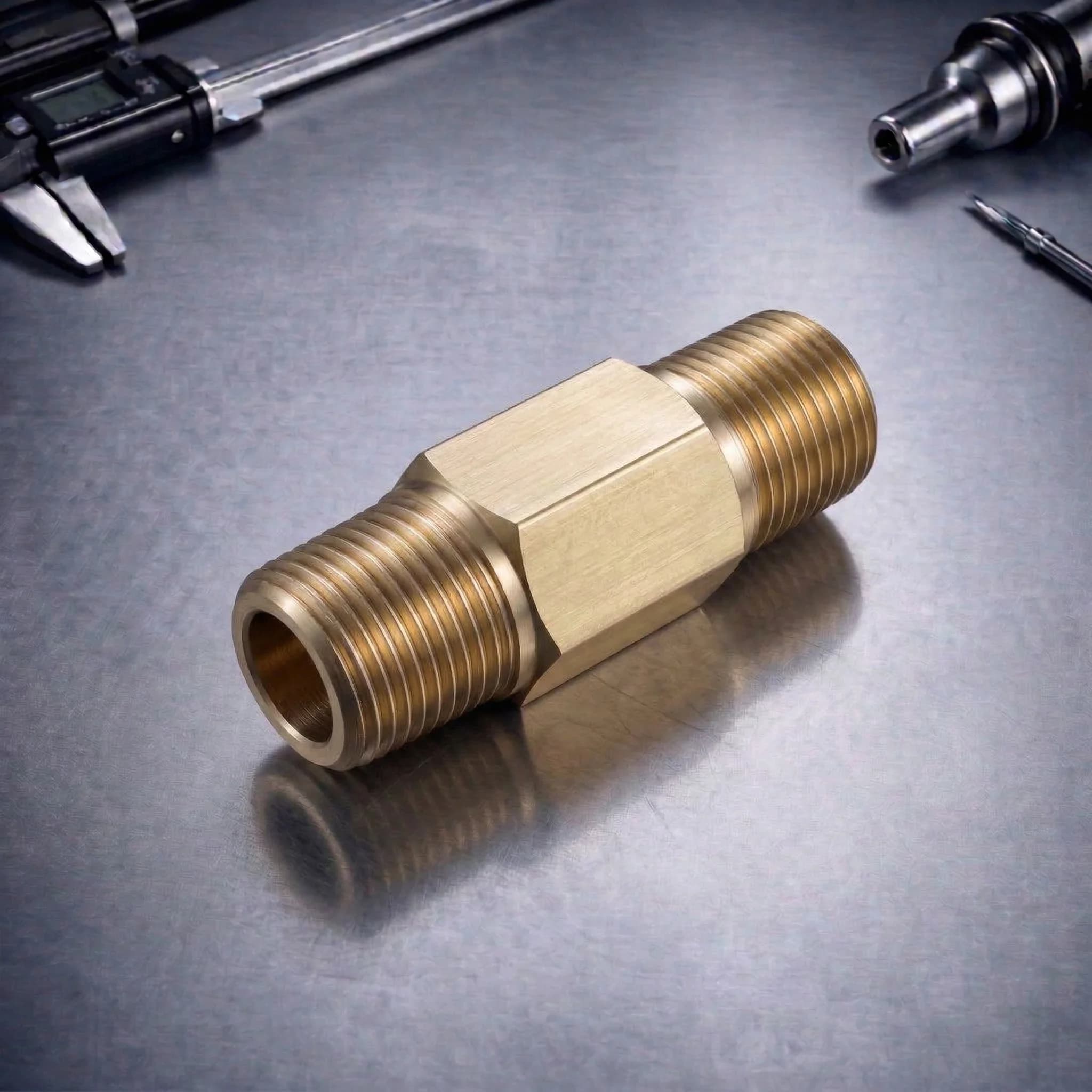
Custom Fluid-Control Fittings
Complex valve bodies, nozzles, and manifold connectors featuring precision NPT/Metric threads and high-tolerance internal seats for leak-proof performance.
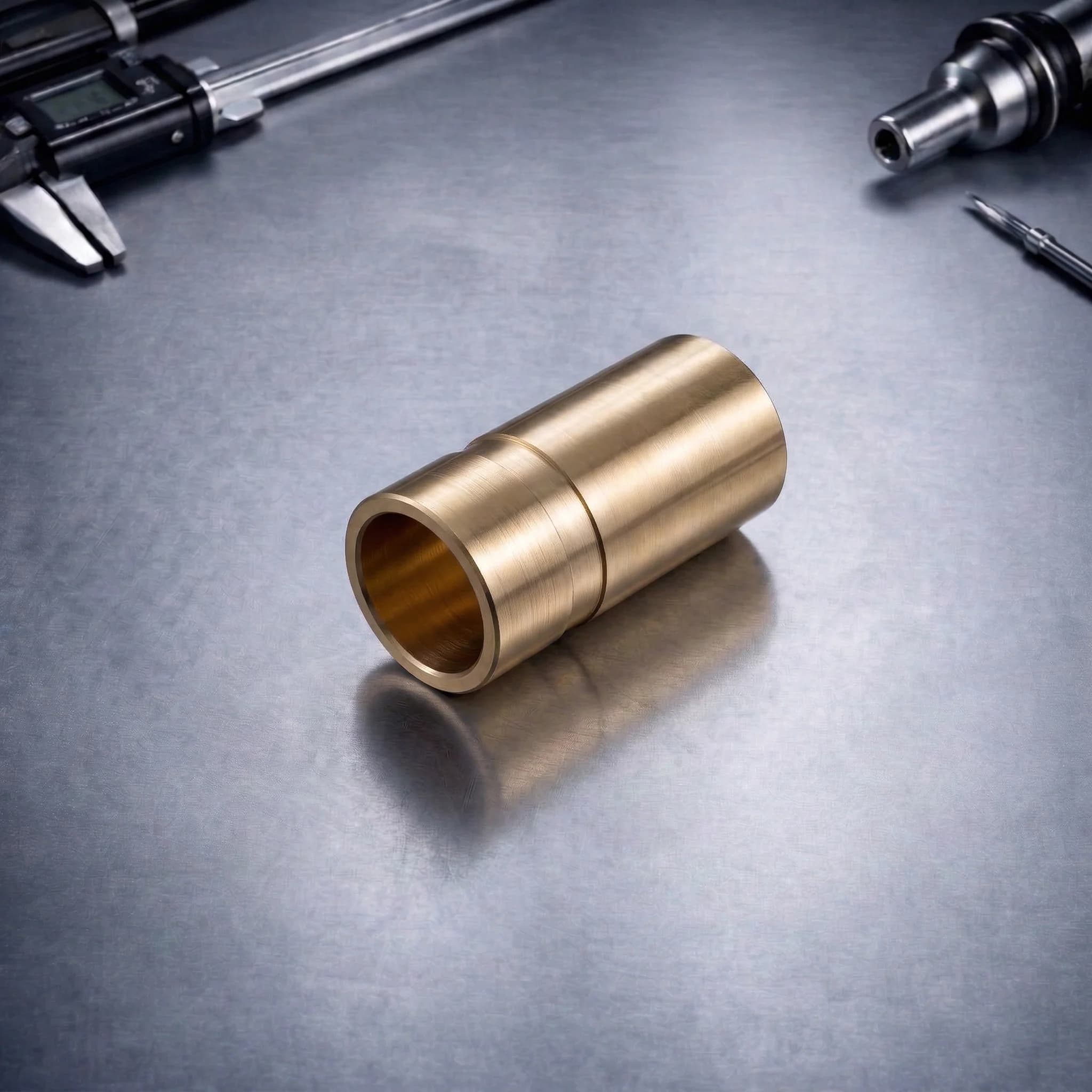
Bearing Journals & Bushings
Critical-fit components turned from stable alloys and polymers, delivered with verified ID/OD concentricity for direct press-fit assembly in industrial machinery.
CNC Turning Target Industries
Aerospace & Defense
ITAR-compliant rotational hardware machined from Titanium and 17-4 PH, featuring full MTR traceability and AS9102 First Article Inspection capability.

Medical Device Manufacturing
Swiss-turned micro-components and surgical instruments featuring biocompatible finishes and ultra-tight tolerances for life-critical applications.

Automotive & E-Mobility
Scalable production of motor shafts, battery connectors, and drivetrain hardware optimized for automated high-volume bar feeding and repeatability.

FAQs & Knowledge Base
Turning & Lathe FAQs

Ready to scale your rotational production?
Upload your technical drawings and CAD data for a comprehensive DFM assessment. Our engineers will review your tolerances, thread specs, and setup strategy to optimize your ROI.Shipping & Logistics
Engineering Review: Under 2 Hours